
If you’re an e-commerce player, you know that coming back from the summer holidays is a huge challenge.
As the end of the year approaches, you need to get back in the saddle quickly to prepare for the busy season.
This last quarter of the year, or Q4, as it’s called in the jargon, is shaping up to be the most crucial period for e-merchants.
Holidays, promotional events, dedicated shopping days: everything comes together to help you maximize your revenue.
Today, the e-commerce sector in France accounts for €146.7 billion in revenue (+13.8% compared to last year).
Revenue that is largely generated in the last quarter of the year.
As a result, the margin for error is extremely small during this decisive period.
It’s therefore essential to build a solid marketing strategy ahead of time to stand out, especially against your competitors.
Here are a few tips to put into practice to ensure your brand’s success this Q4.
What is Q4?
Q4 stands for the fourth quarter of the year.
Q4 therefore covers the last three months of the year, from October to December inclusive.
As explained above, this quarter is vital for all sales players, both online and offline.
Key figures for French e-commerce in 2022
Last year, the French e-commerce sector grew compared to 2021.
Over this period, 2.3 billion transactions were made, a 6.5% increase compared to 2021.
The average online shopping basket now stands at €65, up 6.9% in one year.
Finally, according to a Fevad study, more than 50% of online purchases come from the fashion and clothing industry.
What are the key dates of Q4 2024?
French Days
Date: September 24 to September 30, 2024
Halloween
Date: October 31, 2024
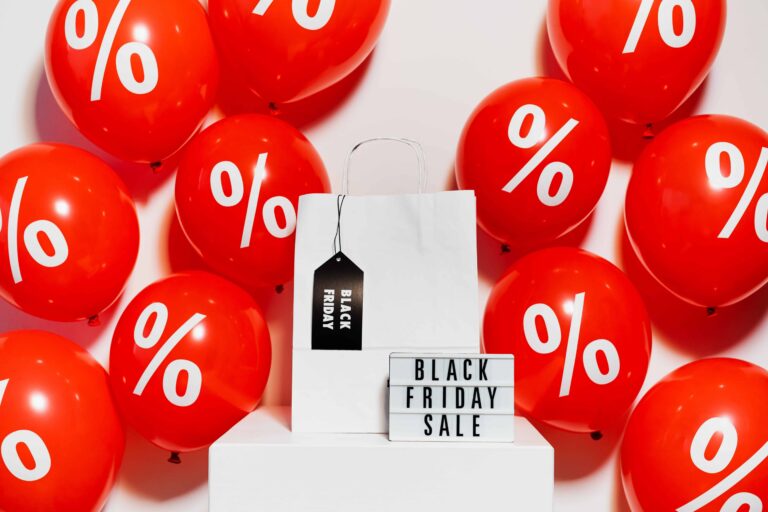
Black Friday
Date: Friday, November 29, 2024
Cyber Monday
Date: Monday, December 2, 2024
Christmas
Date: December 24–25, 2024
New Year
Date: December 31, 2024 – January 1, 2025

E-commerce: tips and strategies for a successful Q4
Tip 1: Optimize your e-commerce site
This may seem obvious at first, but think again: many details can slip through the cracks and you could miss out on huge opportunities.
Prepare your offers ahead of each event
The idea here is to carefully prepare your offers for each event, even if you already have in mind the products or services you want to highlight during this period.
It’s crucial to precisely define special promotions and discounts for each event, as the products you highlight won’t be the same at Christmas, on Black Friday or for New Year.
This can include price cuts, bundles, free gifts or any other relevant promotions.
Make sure these offers are attractive and competitive compared to your competitors.
Highlight your flagship products and identify the most popular products or those best suited to the event in question.
Don’t hesitate to carry out market research to understand which products consumers want most during this period.
Adapt your site to each event
To increase and optimize sales on your site, it’s essential to raise its conversion rate, knowing that on average, an e-commerce site’s conversion rate is around 2.96%.
To achieve this, you must captivate your visitors as soon as they arrive on your site.
We therefore recommend setting up dedicated pages for your products with:
- Detailed descriptions: create dedicated pages for each of your products with comprehensive descriptions.
- Polished visuals: use high-quality images that showcase your products from every angle.
- Presentation videos: add product demo or presentation videos (you can use UGC videos).
- Customer reviews: display genuine customer reviews and encourage satisfied customers to share their experiences.
- Purchase incentives: offer incentives to buy, such as last-minute deals or free shipping.
- Promo codes and perks: offer discount codes or special perks, such as big discounts or installment payment options.
- FOMO (Fear Of Missing Out): create a sense of FOMO by highlighting the exceptional opportunity your offer represents (add a countdown before the end of the offer).
- Adapting to the context: change your homepage, banners and animations to reflect the mood of the current event.
The goal is for consumers to really feel the atmosphere of the event when they visit your site, which will encourage them even more to take action and make a purchase.

Optimize the user purchase journey
According to a 2020 study by the American Baymard Institute, 70% of visitors abandon their shopping cart for various reasons.
To maximize your chances of conversion, here’s what you can do:
- Offer free shipping, or free shipping above a certain order value: this strategy can encourage customers to complete their order.
- Allow guest checkout: let customers place an order without having to create an account, which simplifies the purchase process.
- Simplify the purchase process: reduce the number of steps in the checkout process, keeping only the essential ones.
- Diversify payment methods: offer several payment options, such as PayPal, Apple Pay and Google Pay, to suit customers’ preferences.
- Build trust by displaying trusted partners: reassure visitors by displaying the logos of trusted partners and security certifications.
- Optimize site speed: make sure your website is fast by optimizing the weight of images and videos.
- Make the site fully responsive: make sure your site is mobile-friendly for an optimal user experience.
- Anticipate traffic peaks: plan extra resources for your website to avoid errors or downtime, especially during Q4 when your website traffic will rise sharply.
Tip 2: Adapt your advertising strategy
Once you’ve strengthened your website and run the necessary tests to get it ready for your future visitors, it’s time to look at the strategies to put in place to attract them effectively.
Check your pixels and Conversions API
This is the first step before setting up your ad campaigns.
Pixels are pieces of code that track the actions of visitors who clicked on your ads.
If your pixels don’t work or are faulty, the ad platforms will report partial data that will greatly affect your ads’ performance.
So make sure the TikTok, Meta or Snapchat pixels are correctly installed on your e-commerce sites.
At Neads, we also recommend installing the Conversions APIs as soon as possible.
APIs communicate server to server and give you much more accurate data than pixels.
Increase your ad budgets
If you regularly advertise online on Google Ads or on social media (TikTok Ads, Facebook Ads, Instagram Ads, Snapchat Ads), you know that Q4 is extremely competitive.
As you probably know, this period will be very competitive, and CPMs (cost per thousand impressions) will rise significantly on every platform.
To stay competitive and not fall behind your competitors, you must adjust your advertising strategy by allocating extra budget to your campaigns.
This budget increase will help you maintain your visibility and reach your target audience despite rising costs.
Warm up your audiences ahead of time
The sharp increase in your ad campaign budgets during Q4 is likely to unsettle the algorithms somewhat.
To help, we recommend warming up your audiences a few weeks before Q4 begins.
The main goal of this approach is to increase your visibility with an audience that initially knows little about your brand, but that will already have had a first contact with it when you run your ads during the fourth quarter.
To warm up this initially cold audience, you can set up traffic or awareness campaigns at the top of the sales funnel (TOF, or Top Of Funnel), with a relatively small budget.
The major advantage of this approach is the ability to retarget this audience later, during the fourth quarter.
Once these people have been exposed to your brand and your offer, they are more likely to respond positively to your promotional ads during Q4.
Retargeting will then let you re-engage these consumers, building on the interest they’ve already shown in your business.
Update your audiences
During Q4, you’ll want to reach new audiences who don’t know the brand, but also re-engage audiences who have already shown signs of interest.
These may be people who viewed your content on social media, site visitors, people who abandoned their cart or simply former customers.
It’s therefore essential to update your audiences before Q4 begins so you can run re-engagement and retargeting campaigns optimally.
In the Business Managers, we recommend creating audiences based on the following criteria:
- Website visitors
- Add to cart
- Cart abandonment
- Video views
- Content engagement
Also consider creating lookalike audiences based on existing buyers or visitors.
These lookalike audiences are made up of people with characteristics similar to your existing audience, which can extend your reach to new potential customers.
Finally, we strongly recommend importing your customer email lists or existing customer databases.
This step will let you specifically target your current customers with personalized offers and ads, boosting retention and loyalty.
Structure your ad campaigns
Updating these audiences is good, but you also need to make sure your campaigns are well structured for Q4 to run smoothly.
We strongly recommend adopting a campaign structure that takes into account the different levels of the sales funnel:
- Top of funnel (TOF)
- Middle of funnel (MOF)
- Bottom of funnel (BOF)
Be sure to tailor your ad creatives and messages to each level of the funnel.
You also need to make sure that your campaigns:
- Are clearly separated by product range and category (don’t mix categories together).
- Don’t have overlapping audiences (avoid cannibalization so you don’t needlessly bid against yourself).
- It’s important to adjust this frequency to each level of the sales funnel. As a general rule, repetition should be higher at the bottom of the funnel than at the top. Prospects at the bottom of the funnel are closer to converting and may need repeated exposure to complete their purchase. At the top of the funnel, on the other hand, the goal is more about introducing the brand or product and sparking interest, so repetition can be less frequent.

Tip 3: Plan the creation of your visuals ahead of time
Did you know? The most important element of an ad campaign is creativity.
In fact, more than 70% of your ads’ performance comes down to the visuals and creatives you use.
Of course, you need to set up your campaigns properly, but if you have good creatives, you’ve done the hardest part.
Conversely, if you neglect the creative side, you can be sure you won’t get any results.
Prepare your creatives in advance
As Q4 approaches, you need to plan the production of your visuals and creatives.
These elements play a major role in your ability to grab consumers’ attention and encourage them to interact with your ads.
You need to put yourself in the shoes of the consumers on each channel and adapt your visuals accordingly.
Each creative must be adapted to the right format, whether vertical (9:16), horizontal (16:9), square (1:1) or others, while respecting each platform’s codes.
Video and photo formats are the most commonly used for ads; however, shoots and the production of UGC videos can take some time.
In addition, with ad saturation, especially on TikTok and Snapchat, you need to plan a large stock of ad creatives so as not to bore viewers and to anticipate the underperformance of some of them.
If you plan to launch catalog campaigns to present discounted products, make sure your dynamic ads correctly display the crossed-out prices on the products concerned.
Bet on video
@tess.bbbb Les ongles à la maison grâce à @Manucurist et les vernis led qu’ils m’ont envoyé ???????? #vernisled #nailskit #partenariatrémunéré ? son original – Tessbbbb
Since the Covid-19 pandemic, video has taken a leading place in the world of social media, especially with the rise of TikTok.
Every social platform has put video at the heart of its features, as seen with TikTok, Reels, Shorts and many others.
In 2022, short video became the most engaging format for around 66% of consumers.
Today, 91% of marketers use it to promote their brand, so why not you?
For this Q4, we therefore recommend betting on video, whether motion design, filmed content or UGC videos.
It would be wise to capitalize on this engaging format.
Of course, it’s essential to adapt your videos to each platform’s codes.
Work with creators or influencers
@glowupwithkenza Si tu veux réduire tes imperfections utilise le savon au lait de chèvre de @pinupsecretparis #imperfections #skincare #skincareroutine #savonlaitdechevre ? son original – Kenza ???
Creators and influencers are very attractive options for promoting your products or services during Q4.
This approach lets you showcase your brand to an engaged community, which can help build your company’s awareness and boost sales.
Nearly 87% of consumers have already bought a product based on influencers’ recommendations.
Nevertheless, at Neads, we recommend an approach focused on UGC creators, who come across as more authentic and credible to consumers.
The idea is to work with UGC creators who create content spontaneously.
You can then include these UGC videos in your ad campaigns, generate more conversions and gradually replace the influencer community.
Although less well known than macro-influencers, they are often more affordable to work with and generally show higher engagement rates within their audience.
Here are a few tips for choosing your influencer wisely:
- Look for authentic influencers
- Who match your niche
- Check their engagement rate
- The type of audience
- Their collaboration history
- The cost
Need support for this Q4?
Call on Neads, the creative social ads agency.